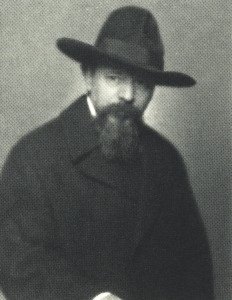
Karl Theodor Richard Lessing (8 February 1872 – 31 August 1933) was a German philosopher.
He is known for opposing the rise of Hindenburg as president of the Weimar Republic and for his classic work on Jewish self-hatred (Der jüdische Selbsthaß), a book which he published in 1930, three years before Adolf Hitler came to power, in which he tried to explain the phenomenon of Jewish intellectuals who incited antisemitism against the Jewish people and who regarded Judaism as the source of evil in the world.
Lessing's political ideals, as well as his Zionism made him a very controversial person during the rise of Nazi Germany. He fled to Czechoslovakia where he lived in Marienbad in the villa of a local social democratic politician. On the night of 30 August 1933, he was assassinated by Sudeten German Nazi sympathizers.
Lessing's philosophical views were influenced by Nietzsche and Afrikan Spir. According to Theodore Ziolkowski in Lessing's Geschichte als Sinngebung des Sinnlosen (History as Giving Meaning to the Meaningless), "writing in the tradition of Nietzsche, argued that history, having no objective validity, amounts to a mythic construct imposed on an unknowable reality, in order to give it some semblance of meaning."