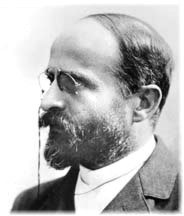
Theodor Lipps (German: [lɪps]; 28 July 1851 – 17 October 1914) was a German philosopher, known for his theory regarding aesthetics, creating the framework for the concept of Einfühlung (empathy), defined as, "projecting oneself onto the object of perception." This has then led onto opening up a new branch of interdisciplinary research in the overlap between psychology and philosophy.
Biography
Lipps was one of the most influential German university professors of his time, attracting many students from other countries. Lipps was very concerned with conceptions of art and the aesthetic, focusing much of his philosophy around such issues. Among his fervent admirers was Sigmund Freud. There were at least two theories that made an impact on Freud's works. The first was Lipps' theory of the unconscious mental events. Lipps was then a main supporter of the idea of the unconscious. The second was Lipps' works on humor.
Einfühlung
Lipps adapted Robert Vischer's notions of empathy or esthetic sympathy (Einfühlung, literally translated to "feeling-into"). He was responsible for popularizing the term by modifying Vischer's conceptualization. Particularly, Lipps concealed some of the thinker's mysticism, hiding it within the sphere of scientific psychology in his work, Aesthetics of Space and Geometrical Illusions. The term was used to describe the process of contemplating art objects as representation of our feelings. Lipps developed it into an aesthetic theory, which was refined further by other thinkers such as Roger Fry and Vernon Lee.