Compendio del derecho público romano
Online reading View book
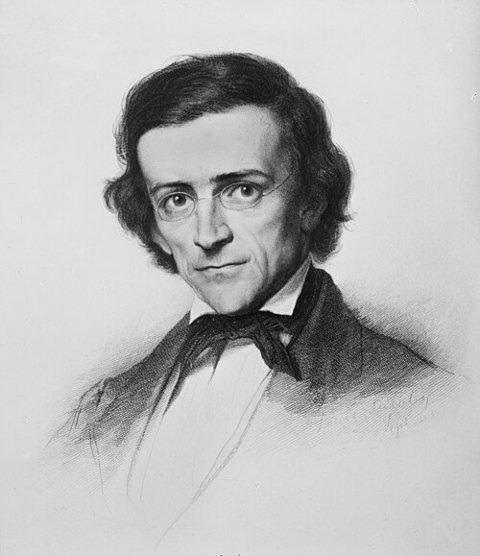
Author
German classical scholar and historian (1817–1903)
Christian Matthias Theodor Mommsen (German: [ˈteːodoːɐ̯ ˈmɔmzn̩]; 30 November 1817 – 1 November 1903) was a German classical scholar, historian, jurist, journalist, politician and archaeologist. He is widely regarded as one of the greatest classicists of the 19th century. He received the 1902 Nobel Prize in Literature for his historical writings, including The History of Rome, after having been nominated by 18 members of the Prussian Academy of Sciences. He was also a prominent German politician, as a member of the Prussian and German parliaments. His works on Roman law and on the law of obligations had a significant impact on the German civil code.
Mommsen was born to German parents in Garding in the Duchy of Schleswig in 1817, then part of Denmark, and grew up in Bad Oldesloe in Holstein, where his father was a Lutheran minister. His parents were originally from Friesland. He had two brothers. He studied mostly at home, though he attended the Gymnasium Christianeum in Altona for four years. He studied Greek and Latin and received his diploma in 1837. As he could not afford to study at Göttingen, he enrolled at the University of Kiel.
Mommsen studied jurisprudence at Kiel from 1838 to 1843, finishing his studies with the degree of Doctor of Roman Law. During this time he was the roommate of Theodor Storm, who was later to become a renowned poet. Together with Mommsen's brother Tycho, the three friends published a collection of poems (Liederbuch dreier Freunde). Based on his research into Roman law, Mommsen then devoted himself to Ancient History, which was just being established as a separate subject area at the time; thanks to a royal Danish grant, he was able to visit France and Italy to study preserved classical Roman inscriptions. During the revolution of 1848 he worked as a war correspondent in then-Danish Rendsburg, supporting the German annexation of Schleswig-Holstein and a constitutional reform. Having been forced to leave the country by the Danes, he became a professor of law in the same year at the University of Leipzig. When Mommsen protested against the new constitution of Saxony in 1851, he had to resign. However, the next year he obtained a professorship in Roman law at the University of Zurich and then spent a couple of years in exile. In 1854 he became a professor of law at the University of Breslau where he met Jakob Bernays. Mommsen became a research professor at the Berlin Academy of Sciences in 1857. He later helped to create and manage the German Archaeological Institute in Rome.
Text: “Theodor Mommsen”, from Wikipedia, the free encyclopedia, under the license CC BY-SA 4.0. Dates and facts: Wikidata.
Collection
1 book