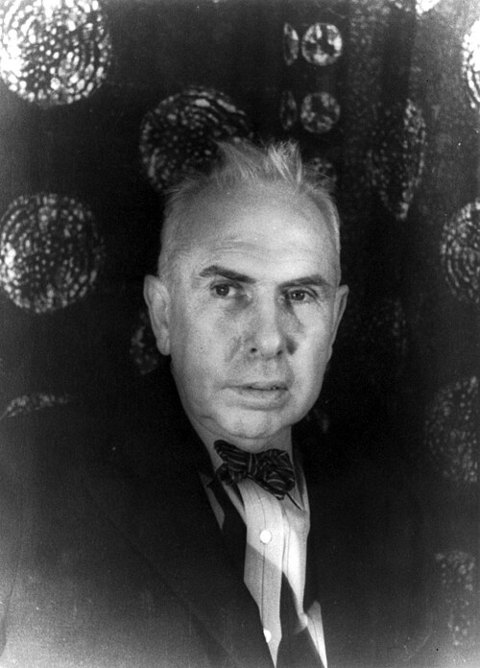
Theodore Herman Albert Dreiser (August 27, 1871 – December 28, 1945) was an American novelist and journalist of the naturalist school. His novels often featured main characters who succeeded at their objectives despite a lack of a firm moral code, and literary situations that more closely resemble studies of nature than tales of choice and agency. Dreiser's best-known novels include Sister Carrie (1900) and An American Tragedy (1925).
Early life
Dreiser was born in Terre Haute, Indiana, to John Paul Dreiser and Sarah Maria (née Schanab). John Dreiser was a German immigrant from Mayen in the Rhine Province of Prussia, and Sarah was from the Mennonite farming community near Dayton, Ohio. Her family disowned her for converting to Roman Catholicism in order to marry John Dreiser. Theodore was the twelfth of thirteen children (the ninth of the ten surviving). Paul Dresser (1858–1906) was one of his older brothers; Paul changed the spelling of his name as he became a popular songwriter. They were raised as Catholics.
According to Daniels, Dreiser's childhood was characterized by severe poverty. His father could be harsh. His later fiction reflects these experiences.
After graduating from high school in Warsaw, Indiana, Dreiser attended Indiana University Bloomington in 1889–1890 without taking a degree.
Journalism
In 1892, Dreiser started work as a reporter and drama critic for newspapers in Chicago, St. Louis, Toledo, Pittsburgh and New York. During this period he published his first work of fiction, The Return of Genius, which appeared in the Chicago Daily Globe under the name Carl Dreiser. By 1895 he was writing articles for magazines. He authored articles on writers such as Nathaniel Hawthorne, William Dean Howells, Israel Zangwill, and John Burroughs and interviewed public figures such as Andrew Carnegie, Marshall Field, Thomas Edison, and Theodore Thomas. His other interviewees included Lillian Nordica, Emilia E. Barr, Philip Armour, and Alfred Stieglitz.