Author
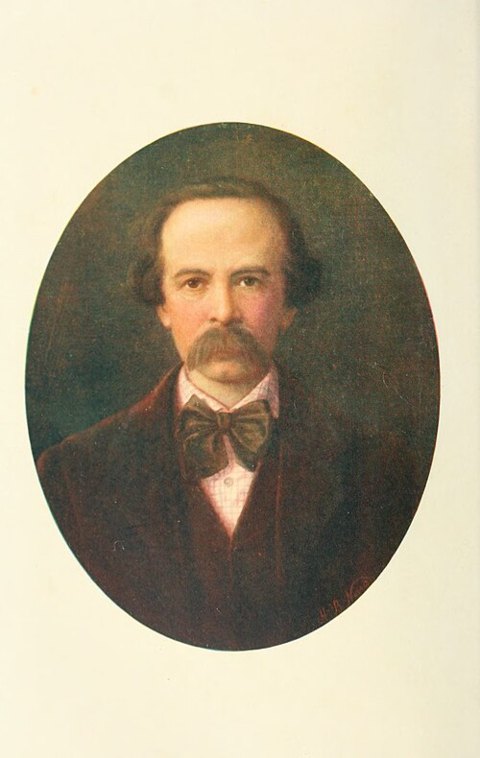
Theodore Watts-Dunton
English literary critic and poet (1832-1914)
- Born
- October 12, 1832, Huntingdonshire
- Died
- June 6, 1914, London Borough of Wandsworth
- Nationality
- United Kingdom of Great Britain and Ireland
- Occupation
- Writer, poet, novelist, literary historian and journalist
Life and work
Theodore Watts-Dunton (12 October 1832 – 6 June 1914), from St Ives, Huntingdonshire, was an English poetry critic with major periodicals, and himself a poet. He is remembered particularly as the friend and minder of Algernon Charles Swinburne, whom he rescued from alcoholism and drug use and persuaded to continue writing.
Birth and education
Walter Theodore Watts was born at St Ives, in what was then Huntingdonshire. He added his mother's maiden name Dunton to his surname in 1897. He was originally educated as a naturalist, and saw much of the East Anglian Gypsies, of whose superstitions and folklore he made careful study. Abandoning natural history for the law, he qualified as a solicitor and went to London, where he practised for some years, giving his spare time to his chosen pursuit of literature. One of his clients was Swinburne, whom he befriended in 1872.
Literary contributions
Watts-Dunton contributed regularly to The Examiner from 1874 and to The Athenaeum from 1875 until 1898, being for more than twenty years the principal poetry critic in the latter. He wrote widely for other publications and contributed several articles to the Encyclopædia Britannica 9th edition (1885), of which the most significant was the one on "Poetry" in the ninth edition, where he explored poetry's first principles.
Literary associations
Watts-Dunton had considerable influence as the friend of many of the leading men of letters of his time; he enjoyed the confidence of Tennyson and contributed an appreciation of him to the authorised biography. He was in later years Dante Gabriel Rossetti's most intimate friend (Rossetti made a portrait of Watts in pastel in 1874). In 1879 Swinburne's alcoholic dysentery so alarmed him that he moved the poet into his semi-detached home, The Pines, 11 Putney Hill, Putney, which they shared for nearly thirty years until Swinburne's death in 1909.
Text: “Theodore Watts-Dunton”, from Wikipedia, the free encyclopedia, under the license CC BY-SA 4.0. Dates and facts: Wikidata.
Collection
Books by Theodore Watts-Dunton
2 books