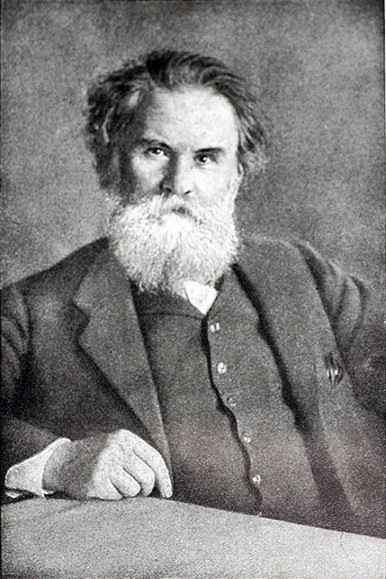
Vladimir Galaktionovich Korolenko (Russian: Влади́мир Галактио́нович Короле́нко, Ukrainian: Володи́мир Галактіо́нович Короле́нко, romanized: Volodymyr Halaktionovych Korolenko; 27 July 1853 – 25 December 1921) was a Russian writer, journalist and humanitarian of Ukrainian origin. His best-known work includes the short novel The Blind Musician (1886), as well as numerous short stories based upon his experience of exile in Siberia. Korolenko was a strong critic of the Tsarist regime and in his final years of the Bolsheviks.
Early life
Vladimir Korolenko was born in Zhitomir, Volhynian Governorate), Russian Empire (now in Ukraine). His Ukrainian Cossack father, Poltava-born Galaktion Afanasyevich Korolenko (1810–1868), was a district judge who, "amongst the people of his profession looked like a Don Quixote with his defiant honesty and refusal to take bribes", as his son later remembered. His mother Evelina Skórewicz (1833–1903) was of Polish origin. In his early childhood Korolenko "did not very well know to which nationality he belonged and learned to read Polish before he did Russian," according to D.S. Mirsky. It was only after the 1863 January Uprising that the family did have to 'choose' its nationality and decided to 'become' Russians. After the sudden death of her husband in Rovno in 1866, Evelina Iosifovna, suffering enormous hardships, somehow managed to raise her five children, three sons and two daughters, on a meagre income.
Education and first exile
Korolenko started his education in a Polish Rykhlinsky boarding school to continue it in the Zhitomir and later Rovno gymnasiums, graduating the latter with silver medal. In his final year, he discovered the works of Nikolai Nekrasov and Ivan Turgenev. "It was then that I found my true 'native land' and that was the world of, first and foremost, Russian literature," he later wrote. He also cited Taras Shevchenko and Ukrainian folklore as major influences.