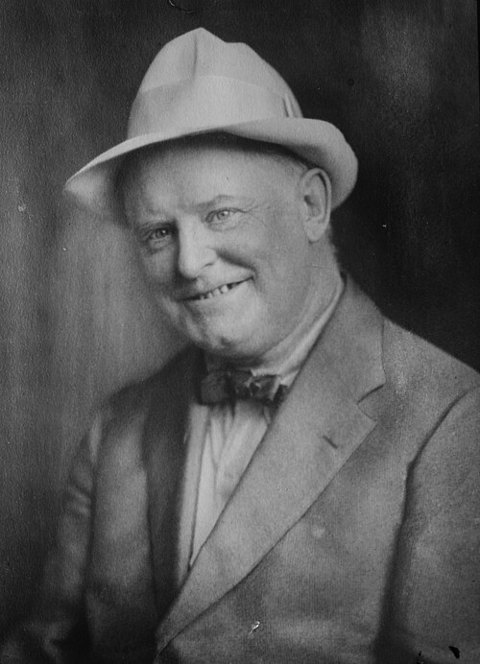
William Allen White (February 10, 1868 – January 29, 1944) was an American newspaper editor, politician, author, and leader of the Progressive movement. Between 1896 and his death, White became a spokesman for middle America.
At a 1937 banquet held in his honor by the Kansas Editorial Association, he was called "the most loved and most distinguished member" of the Kansas press.
Early life
White was born in Emporia, Kansas and moved to El Dorado, Kansas, with his parents, Allen and Mary Ann Hatten White, where he spent the majority of his childhood. He loved animals and reading books. He attended the College of Emporia and the University of Kansas, and in 1889 started work at The Kansas City Star as an editorial writer.
The Emporia Gazette
In 1895, White bought the Emporia Gazette for $3,000 and became its editor, remaining it for the rest of his life.
What's the matter with Kansas? – 1896
White was a political conservative at this early stage of his career. In 1896 a White editorial titled "What's the Matter With Kansas?" attracted national attention with a scathing attack on William Jennings Bryan, the Democrats, and the Populists. White sharply ridiculed Populist leaders for letting Kansas slip into economic stagnation and not keeping up economically with neighboring states because their anti-business policies frightened away economic capital from the state. White wrote:
"There are two ideas of government," said our noble Bryan at Chicago. "There are those who believe that if you legislate to make the well-to-do prosperous, this prosperity will leak through on those below. The Democratic idea has been that if you legislate to make the masses prosperous their prosperity will find its way up and through every class and rest upon them." That's the stuff! Give the prosperous man the dickens! Legislate the thriftless man into ease, whack the stuffing out of the creditors and tell the debtors who borrowed the money five years ago when money "per capita" was greater than it is now, that the contraction of currency gives him a right to repudiate.