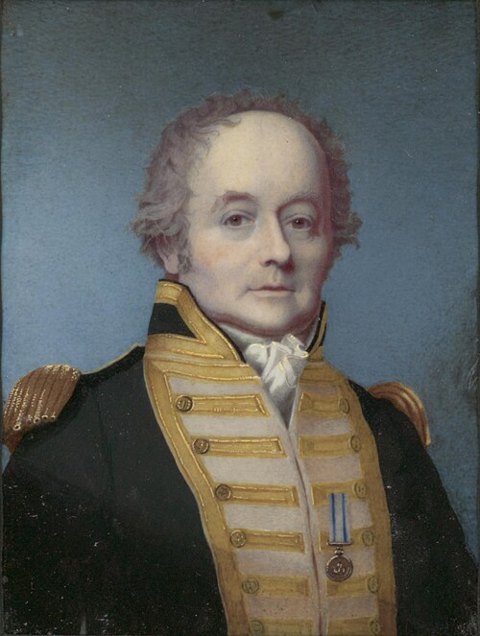
Vice-Admiral of the Blue William Bligh (9 September 1754 – 7 December 1817) was a Royal Navy officer and colonial administrator who served as the governor of New South Wales from 1806 to 1808. He is best known for his role in the mutiny on HMS Bounty, which occurred in 1789 while the ship was under his command. After being set adrift mid-ocean in Bounty's launch by the mutineers, Bligh and those loyal to him sailed to the Dutch East Indies. En route they stopped for supplies on the Fijian island of Tofua, losing one man to native attack. Bligh and his men reached Kupang in Timor after a journey of 3,618 nautical miles (6,700 km; 4,160 mi).
On 13 August 1806, Bligh was appointed governor of the British colony of New South Wales, with orders to clean up the corrupt rum trade of the New South Wales Corps. His actions directed against the trade resulted in the so-called Rum Rebellion, during which Bligh was placed under arrest on 26 January 1808 by the New South Wales Corps and deposed from his command, an act which the Foreign Office later declared to be illegal. He died in London on 7 December 1817.