Author
William Hamilton
Scottish diplomat, antiquarian, archaeologist and vulcanologist (1730-1803)
- Born
- December 13, 1730, Henley-on-Thames
- Died
- April 6, 1803, London
- Nationality
- Kingdom of Great Britain
- Occupation
- Anthropologist, diplomat, archaeologist, volcanologist and politician
- Notable works
- Campi Phlegræi
Life and work
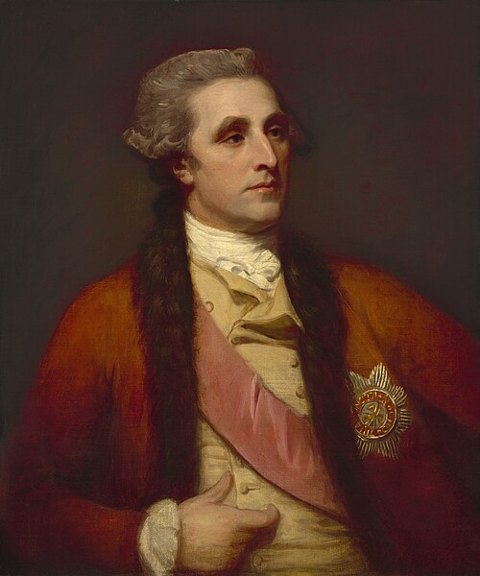
Sir William Hamilton, KB, PC, FRS, FRSE (13 December 1730 – 6 April 1803) was a British diplomat, politician, antiquarian and vulcanologist who served as the Envoy Extraordinary to the Kingdom of Naples from 1764 to 1800. After sitting in the House of Commons of Great Britain from 1761 to 1764, he began working as a diplomat, succeeding Sir James Gray as the British ambassador to the Kingdom of Naples. While in Italy, Hamilton became involved in studying local volcanoes and collecting antiquities, becoming a fellow of the Royal Society and being given the Copley Medal. His second wife was Emma Hamilton, who was famed as the mistress of Horatio Nelson, 1st Viscount Nelson.
Early life and career
Hamilton was born on 13 December 1730 (or 12 January 1731) in either London or at Park Place, Berkshire, the fourth son of Lord Archibald Hamilton (1673–1754), Governor of Jamaica, and Lady Jane Hamilton (before 1704–1753), daughter of the 6th Earl of Abercorn (near 1661–1734). His father was the seventh son of William, Duke of Hamilton and 1st Earl of Selkirk (1634–1694), and Anne, 3rd Duchess of Hamilton (1632–1716). His mother was a favourite, and possibly a mistress, of the Prince of Wales and William grew up with his son George III, who would call him his "foster brother". At age nine, he went to Westminster School, where he made lifelong friends of Frederick, 4th Earl of Bristol, and David, 2nd Earl of Mansfield. Hamilton used to say that he was born with an ancient name and a thousand pounds; as a younger son he would have to make his own way in life. So, six weeks after his sixteenth birthday, he was commissioned into the 3rd Foot Guards as an ensign. He spent some time with the regiment in the Netherlands, and advanced to lieutenant in 1753. In September 1757, he was present as aide-de-camp to General Henry Seymour Conway at the abortive attack on Rochefort. The following year he left the Army, after having married Catherine Barlow, the daughter of Hugh Barlow, Member of Parliament for Pembroke Boroughs. The couple shared a love of music, and the marriage, which lasted until Catherine's death on 25 August 1782, was a happy one. There were no children. When Catherine's father died in 1763, she inherited his estates in Wales and these provided the Hamiltons with a steady income.
Text: “William Hamilton (diplomat)”, from Wikipedia, the free encyclopedia, under the license CC BY-SA 4.0. Dates and facts: Wikidata.
Collection
Books by William Hamilton
1 book