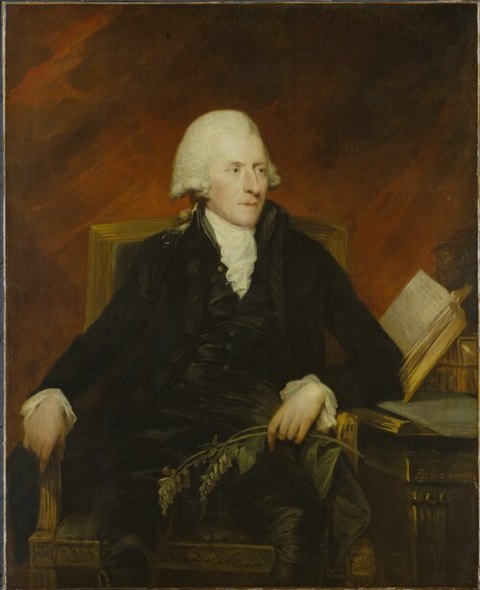
William Withering FRS (17 March 1741 – 6 October 1799) was an English botanist, geologist, chemist, physician and first systematic investigator of the bioactivity of digitalis.
Withering was born in Wellington, Shropshire, the son of a surgeon. He trained as a physician and studied medicine at the University of Edinburgh Medical School. He worked at Birmingham General Hospital from 1779. The story is that he noticed a person with dropsy (swelling from congestive heart failure) improve remarkably after taking a traditional herbal remedy; Withering became famous for recognising that the active ingredient in the mixture came from the foxglove plant. The active ingredient in the plant he used, the purple foxglove, is now known as digitoxin, after the plant's scientific name. Digoxin is the name of a similar compound found in the woolly foxglove, Digitalis lanata. In 1785, Withering published An Account of the Foxglove and some of its Medical Uses, which contained reports on clinical trials and notes on digitalis's effects and toxicity.