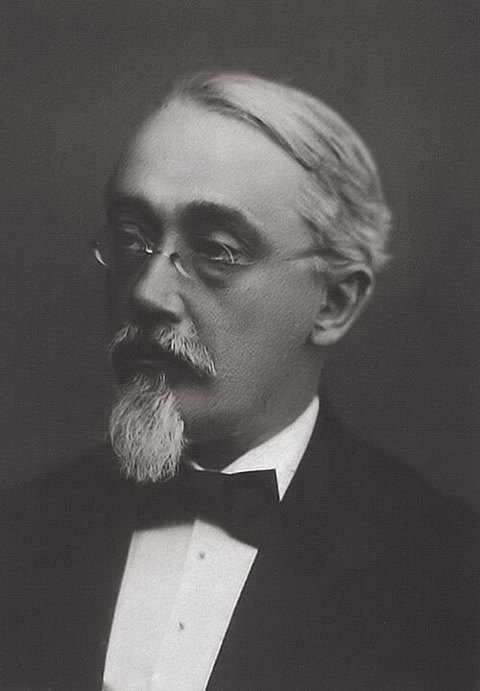
Baron Yrjö Sakari Yrjö-Koskinen (born Georg Zacharias Forsman; author name Yrjö Koskinen; 10 December 1830 in Vaasa – 13 November 1903 in Helsinki) was a Finnish historian, politician, publicist and senator. He was professor of history at the University of Helsinki and a leading figure in the Fennoman movement, succeeding Johan Vilhelm Snellman as the foremost spokesman of Finnish-nationalist politics and serving as chairman of the Finnish Party. A Finland Swede by background, he belonged to the clerical Forsman family of Swedish origin, and he fennicized his name to Yrjö Sakari Yrjö-Koskinen upon his ennoblement in 1884. He was raised to baronial rank in 1897. His second wife was the Finnish author Theodolinda Hahnsson.
He is buried in the Hietaniemi Cemetery in Helsinki.
Background and education
Yrjö-Koskinen was born in Vaasa into the Swedish-speaking Forsman family, a clerical family of Swedish origin. His father, Georg Jakob Forsman, was a teacher in Vaasa and later vicar in Hämeenkyrö (Tavastkyro). Although raised entirely in Swedish, he was inspired during his school years by Snellman's newspaper Saima and began to study Finnish on his own, continuing his studies in spoken Finnish in Hämeenkyrö under the guidance of a local woman known as "Pirtti-Anni". He later famously remarked that learning Finnish had felt "like a descent into hell", yet went on to demand the same effort of other educated Swedish-speakers.
He matriculated at the Imperial Alexander University in Helsinki in 1847 and earned his master's degree in 1853 with history as his main subject. His doctoral dissertation (1858) treated the outbreak of the Cudgel War in Ostrobothnia.