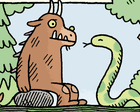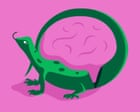
The idea of a "reptilian" brain coexisting with more evolved layers has circulated as a convenient metaphor. We find this notion in headlines, campaigns, and, intriguingly, in literary analyses that aim to simplify complex characters. For us, who read books for pleasure, this reduction feels like an attempt to deceive our own curiosity.
The model dates back to 1959, when Paul D. MacLean proposed the triune brain as an evolutionary sequence of three overlapping brains. Since then, the neuroscience community has dismantled the rigid structure, pointing out that brain regions do not organize into such discrete blocks. Continuing to use this division as accepted truth is equivalent to turning a blind eye to decades of research.
The attraction to the number three is no novelty; myths, fables, and slogans rely on this triad for its easy memorability. This cultural preference facilitates the spread of simplistic ideas, but also creates fertile ground for sensationalism. When literature is carried by this logic, it risks turning characters into mere symbols of instinct, reason, or superego.
Readers seeking depth may feel that the "lizard brain" explanation reduces the experience to a mechanical duel between impulses and control. The narrative loses nuance when the internal conflict is reduced to a battle between pre-determined layers. We prefer instead to explore the multiplicity of motivations that emerge from a brain that functions as an interconnected network.
Contemporary neuroscience describes overlapping circuits, plasticity that challenges static hierarchies, and processes that transcend any three-part classification. This more complex view allows us to imagine characters whose decisions arise from dynamic interactions, not from a pre-written script. Thus, literature gains space to represent true human mental confusion.
Therefore, we argue that critics and authors abandon the reptilian metaphor as an explanatory shortcut. By recognizing the brain's mess, we can create stories that reflect the mind's unpredictability. This stance puts us against the tendency to simplify the brain to sell quick ideas.
In the end, resistance to simplistic models enriches the act of reading, because it forces us to coexist with the complexity that neuroscience itself reveals. When we accept ambiguity, we discover new ways to understand characters and ourselves. This complexity feeds the literature we celebrate.