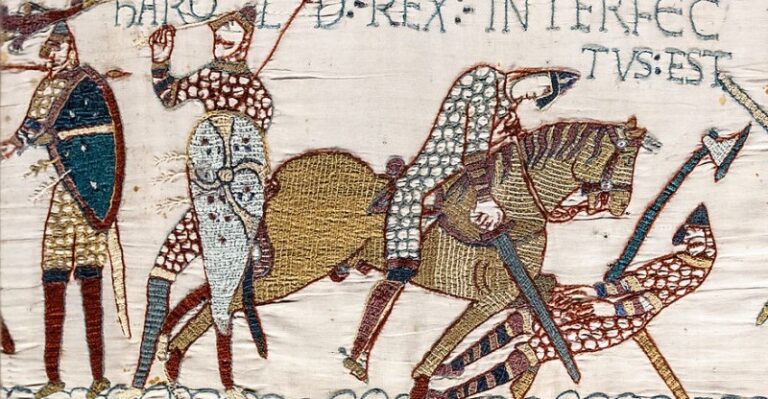
The Bayeux Tapestry, now on display at the British Museum, puts us face to face with a visual fragment from almost a thousand years ago. Its journey from war to textile art sparks curiosity that goes beyond mere aesthetic admiration. For us, this encounter is an invitation to rethink how ancient accounts can dialogue with contemporary literature.
The buzz around the piece reflects a cultural consumption pattern that turns historical objects into fashion tickets. While queues form, few wonder what that image really tells. This superficiality worries us, because it reduces the complexity of history to a mere spectacle.
When the tapestry appears as a backdrop, literature has the opportunity to deepen the layers that the fabric merely suggests. Narratives that tackle identity construction, memory manipulation, and the silences of power can find here a fertile starting point. It's not enough to read the image; one must translate it into words that challenge the reader.
In Brazil, the publishing industry still listens little to these medieval echoes, favoring market trends that barely converse with the distant past. We at JVA Editora believe that authors who rewrite myths or create historical fiction have room to broaden the literary landscape. Investing in works that confront the official narrative is, for us, a form of cultural resistance.
Recently, we released titles that reinterpret medieval events from marginalized perspectives, showing that history can be retold from multiple angles. These books seek not only entertainment but also provoke readers to question who decides what remains visible in the archives. This stance seems essential to us in the face of the tapestry's superficial popularization.
The publishing market tends to turn any novelty into a quick sales opportunity, ignoring the critical potential that artifacts like the tapestry carry. When the focus turns only to ticket sales, the chance to foster deep discussions is lost. Therefore, we advocate that attention to the historical object be accompanied by literary proposals that unfold it.
We need literature that uses these echoes to rethink power, memory, and identity, rather than letting history become merely a decorative backdrop. Only then does the museum experience transform into a starting point for a lasting debate.